“It shouldn’t take a global disaster for us to adopt a vital hygiene habit.”
The Coronavirus Disease 2019 (COVID-19) has more or less stopped the world. With a near shutdown, crowded metros like Mumbai and Delhi are like post-apocalyptic tundra with mask-wearing beleaguered citizens and eerily empty shopping areas. In a country of 1.3 billion people, this is a significant disruption. Ironically, coronavirus shutdowns have led to a distinct reduction in air pollution in countries like China and India, potentially preventing thousands of deaths. In India alone, air pollution is responsible for over 1.2 million deaths annually. Earlier this week, a Stanford University scientist has claimed that coronavirus-related reduction in air pollution has already saved 77,000 lives in China.
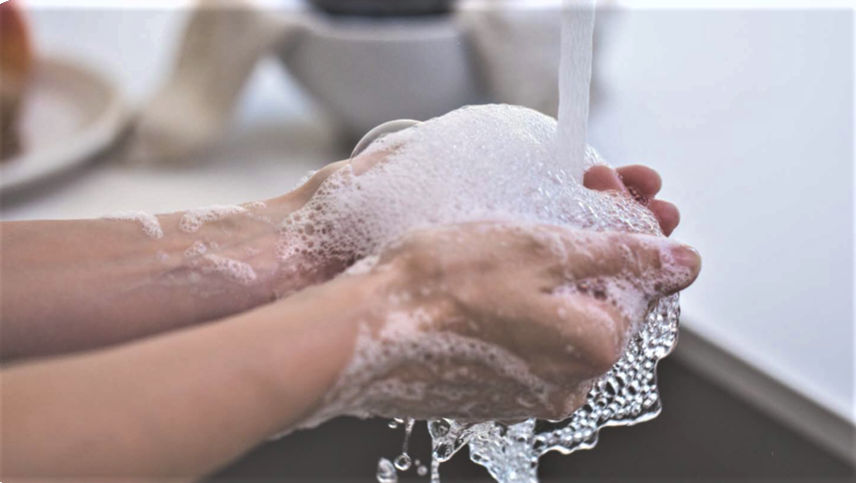
There is another thin silver lining to the cloud of fear and paranoia that has arrived with COVID-19: People have started washing their hands with soap regularly. Hand washing with soap is a personal hygiene practice that is crucial for our health and should be part of our daily routine. Somewhere at the back of our minds we’ve always known this. Doordarshan has been crying out loud since the 1970s, urging people to wash hands not just with water but with soap, or ash in places with no access to soap. Over the decades, there have been numerous public and commercial campaigns in India highlighting the importance of washing with soap – who can forget Lifebuoy’s catchy jingle “Tandurusti ki raksha karta hai Lifebuoy…” – all stressing the importance of washing with soap, because soap is an effective germ-killing agent. And yet, according to a 2017 report of the World Health Organisation, each year something as commonplace as seasonal flu kills up to 650,000 people globally. To a large extent this can be prevented merely by making sure everyone washes their hands with soap regularly, but for some reason many of us have simply refused to adopt this habit. A cursory glance at any public bathroom – men’s or women’s – at a mall or an airport will reveal that only a fraction of people wash their hands with soap after using the services. It has taken a pandemic to change this.
The belief that water alone is enough for cleansing is not unique to India. A 2010 study conducted in Bangladesh, published in the journal BMC Public Health, found that the number of Bangladeshis who washed hands with soap was “consistently low”, a large number of them believing water to be a “potent purifying agent”. The visual imagery of clean hands triggers a sense of false confidence in people, even as they pass on invisible germs to those they come in contact with. Quite apart from others, such people can seriously harm themselves, too.
Not washing hands properly is directly related to malnutrition and stunting in India. Eating with unclean hands leads to infectious diseases. Repeated bouts of such diseases, like diarrhoea and environmental enteric dysfunction, lead to critical losses of both micro and macro nutrients, and are leading causes of child stunting in the country. “India has one of the highest stunting rates in the world. Frequent hand-mouth contact, a potential source of bacteria, viruses and parasites, is most widespread among children,” says Madhavika Bajoria, from Impact4Nutrition Secretariat, a public-private engagement platform that aims to spread nutrition messaging to the last mile. “Limiting child exposure to pathogens through strategic interventions like hand washing can be critical in reversing the abysmal childhood stunting trend in our country.”
By following the misplaced “if it’s not looking dirty, it’s clean” notion, we pose a grave health risk to our children and ourselves. Instilling best hygiene practices at a young age will translate into a fitter, healthier future generation. In 2015, Sight and Life, a global non-profit working against malnutrition, initiated an 18-month nutrition and sanitation programme in Karnataka – in partnership with PATH, Karuna Trust and Akshaya Patra – to get teachers to motivate students to practice positive hygiene and nutrition behaviours. “Through games, rhymes, ambassadors and fun activities, we inculcated lasting behaviour change in 2600 schools in four districts. Key practices include washing hands with soap,” says Kalpana Beesabathuni, Global Lead-Technology & Entrepreneurship, Sight and Life. The focus was also on balanced nutrition but without hygiene and sanitation, the fight against stunting is incomplete. This kind of intervention is required across India on a war footing today.
Recognising this, in 2018, the Government of India’s POSHAN Abhiyaan (National Nutrition Mission) included hand washing and sanitation in the key mass behaviour changes required to tackle malnutrition and stunting. Internationally, each year on October 15, Global Handwashing Day aims to drive home the importance of hand washing with soap in saving lives and keeping us healthy. In 2019, Centers for Disease Control and Prevention USA launched a ‘Life is Better with Clean Hands’ campaign much before the coronavirus hit us like an avalanche. Its main message is to highlight the crucial times in the day you must wash your hands with soap. “Research shows that to prevent infectious diseases and resulting nutritional imbalances, hand washing is most critical after toilet use and before food preparation,” says Bajoria. Chinese, Indian or American, adult or minor, it is absolutely essential that your hands are cleaned with soap after every toilet use and before every meal preparation every day. You should also wash your hands with soap if you are unwell, sneezing or coughing, before and after you handle raw meats, and after using public transport. Remember this even after COVID-19 is history. Until then, keep calm and don’t sneeze into your palm.
An edited version appeared in Mumbai Mirror on March 19, 2020: https://bangaloremirror.indiatimes.com/opinion/you/wash-hands-with-soap-not-just-for-covid-19/articleshow/74698490.cms
 Kalyani Prasher