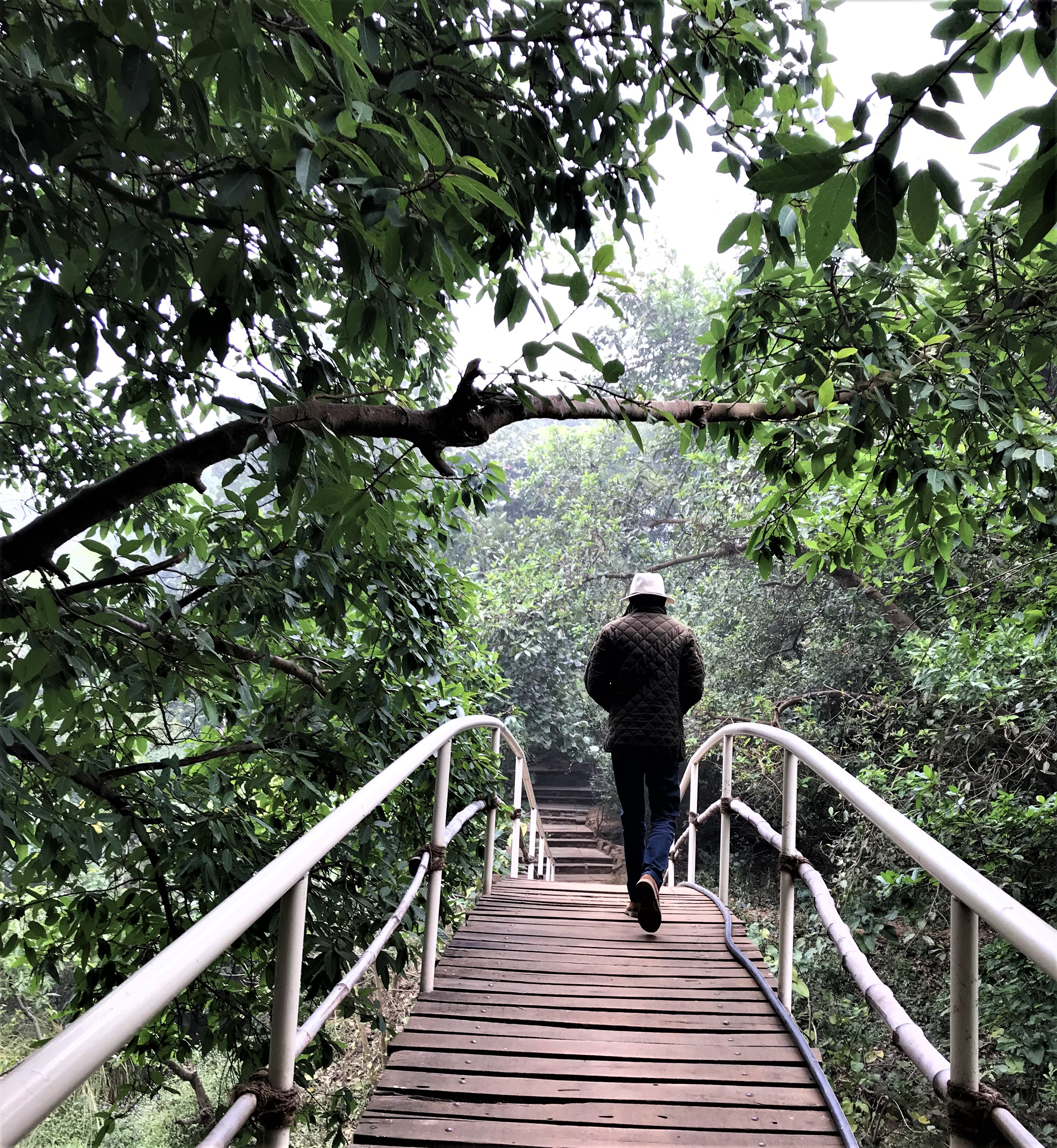
Wildlife safaris are not the most luxurious holidays one can opt for. You wake up earlier than it should be legally allowed on a holiday; the jeep ride inside the park is bumpy; for the most part on the safari it is either too hot or too cold; you have no decent bathroom break for about five hours; and often you end up seeing nothing more than a sleepy peacock and a deer or two. Why do I still do it? Because it is also the only type of holiday that offers a complete break from daily life: green, quiet, with no connections with the world outside, it comes with the thrill of seeing the animal kingdom’s carefully constructed social order.
Watching a deer family chilling in each other’s company or alert to the presence of a predator, observing how different animals behave and interact, recharges you in ways you cannot imagine unless you go on a safari – once you try it, you’ll be hooked. In the era of smartphones and nonstop connectivity, it is good to disconnect from your known world and immerse yourself in another. The way of life in the jungle is endlessly fascinating. The predator-prey game is always on, and life is never taken for granted in a jungle that has its king among those present. Panna National Park is one of them, with about 35 tigers at last count.
While most people visit Panna in search of the elusive tiger, the biggest attraction for me is the park itself. One of the most beautiful national parks in the country, the gorgeous landscape inside Panna shifts from lush thickets of teak, mahua and Arjun trees, to open meadows of tall grass, to the immensely green Dhundwa gorge where you can see majestic vultures circling in the wind. On my last safari, I spotted an impossibly large red-headed vulture, a critically endangered species that is rare to see, leave alone observe for 15-20 minutes like we had a chance to.
Because the forest experience kind of borders on roughing it out, it is a good idea to pick a comfortable hotel to return to at the end of the safari. We picked Sarai at Toria, recommended by a friend who had visited earlier. The small hotel is run by wildlife conservationist couple Dr Raghu Chundawat and Joanna Van Gruisen and its eight rooms are spread over nine acres of beautiful unspoilt rustic landscape, made even lovelier by the River Ken that flows gently along on one side.
The architecture and design of Sarai at Toria is its USP: Spacious, minimal, cottage-style rooms come with even larger bathrooms, both done up in muted earthy tones. The thatched roof and fabricated mud exterior of the cottages combine with the large fields that surround them to make it seem like you are living in a local village (just with all the luxury mod cons). Everything you see is exceedingly pleasing to the eye, especially the pair of exquisite jackals that often came to visit our room.
I spent many hours relaxing by the river, outside the main dining hall, where you eat all your meals with everyone else who happens to be staying at the hotel. Sharing safari stories over home-style Indian or Continental food is a joy in itself – the group is intimate, with a maximum of 12-15 likeminded people.
Apart from the jungle safari, I took a bird-watching boat tour on the Ken (comes free with your stay). As the local boatman steered our little ride across the river, we saw common kingfisher, pied kingfisher, apart from several cormorants, egrets and other beautiful aquatic birds. The ride is usually an hour before sunset and on the return journey you can see the shimmering sun setting over the Ken… A breathtaking sight that will stay with me for many sunsets to come.
A trip to Panna National Park is full of such memorable moments. Whether it is the quietness of the forest, the stillness of the water or the refreshing change of scenery, there is joy to be had in every little thing you do, every single day.
Appeared in Travel + Leisure magazine on October 4, 2018: https://www.travelandleisureindia.in/places/local/panna-national-park-madhya-pradesh/
 Kalyani Prasher